

- 16493 Bodman Rd Mt. Orab, OH 45154
- info@empirehome.solutions
- Deck Division: 513-513-DECK(3325)
- Office: (513) 773-1567
Wood Deck Installation Cincinnati: 2026 Cost Guide
The wood deck installation Cincinnati homeowners choose for its natural appearance and lower upfront cost runs $14 to $38+ per square foot installed depending on the wood species — and a properly built, well-maintained wood deck in SW Ohio can last 20 to 30+ years. Empire Home Solutions is a licensed deck contractor serving Cincinnati, Mt. Orab, and Hamilton County with wood deck design, build, and finishing.
By the Empire Home Solutions Team · Last updated 18, June 2026
Wood decking remains a popular and legitimate choice in Cincinnati — not every homeowner needs a low-maintenance composite, and the natural grain, texture, and warmth of real wood can’t be precisely replicated. The decision comes down to: which wood species works for Ohio’s climate, what maintenance you’re willing to commit to, and how the upfront cost of wood compares to the long-term cost of ownership. This guide covers wood deck costs in Cincinnati by species, the best wood for outdoor decks 2026, how long wood lasts in Ohio weather, and what the permit requirements look like.
For our composite deck guides, see our composite deck installation Cincinnati guide and our Trex deck installation guide.
How much does wood deck installation cost in Cincinnati?
Wood deck installation cost in Cincinnati in 2026 by species:
Wood species | Material (per sq ft) | Installed (per sq ft) |
Pressure-treated pine | $2 – $5 | $14 – $22 |
Cedar | $5 – $10 | $20 – $32 |
Redwood | $8 – $14 | $26 – $38 |
Tropical hardwood (Ipe, Cumaru) | $12 – $20 | $32 – $52+ |
For a typical 400 sq ft Cincinnati deck:
- Pressure-treated pine: $7,000 – $11,000
- Cedar: $10,000 – $16,000
- Tropical hardwood: $16,000 – $26,000+
Wood deck installation cost in Cincinnati runs consistently below composite at the same square footage — the most direct wood deck vs composite cost comparison puts pressure-treated pine 30–50% below entry composite at installed price. That gap narrows when you factor in 10-year maintenance cost, which we cover in the comparison section below.

Cedar deck install — is cedar the right choice for Cincinnati?
A cedar deck install is the most popular premium wood option for Cincinnati homeowners who want natural wood aesthetics with better durability than pressure-treated pine. Cedar’s appeal in Ohio:
Natural rot and insect resistance. Cedar’s natural oils inhibit rot fungi and repel insects without chemical treatment — a genuine advantage over pressure-treated pine. In Cincinnati’s humid summers and wet springs, this matters for long-term performance.
Dimensional stability. Cedar is less prone to warping, cupping, and checking than pressure-treated pine as it dries, which means a cedar deck looks better in the first 2–3 years before maintenance begins.
Appearance. Cedar’s warm, consistent grain is genuinely attractive and takes stain well. A freshly stained cedar deck in a Cincinnati neighborhood is hard to match aesthetically.
The honest caveat for Ohio: Cedar’s natural oils provide initial protection but don’t eliminate the need for maintenance in Cincinnati’s climate. Annual or biennial sealing and staining is required to maintain cedar’s appearance and extend its lifespan. Without maintenance, cedar weathers to a gray and begins to split and check within 3–5 years. A cedar deck install is a commitment to ongoing upkeep — not a fire-and-forget installation.
Expected lifespan: 20–30 years with consistent maintenance; 10–15 years without.
Pressure treated deck — the Cincinnati standard
A pressure treated deck is the most common choice for Cincinnati residential decks at the entry and mid-range price point, and for good reason: modern ACQ and Copper Azole pressure-treated pine is genuinely durable for Ohio conditions.
Modern PT lumber is arsenic-free. The older CCA (chromated copper arsenate) treatment was phased out for residential use in 2004. Today’s residential PT lumber uses ACQ (Alkaline Copper Quaternary) and Copper Azole — copper-based preservatives with no arsenic compounds, registered by the EPA for residential deck applications. The greenish tint in fresh PT lumber comes from the copper content.
Fastener specification is critical. Modern ACQ treatment is more corrosive to metal fasteners than the old CCA formula. Hot-dipped galvanized or stainless steel fasteners and hardware are required — standard electrogalvanized screws will corrode within a few seasons in contact with ACQ-treated lumber. We use the correct fastener specification on every PT deck build.
Treatment level matters. PT lumber is rated by treatment retention level: UC3B is the standard for above-ground deck boards; UC4A/UC4B is required for ground contact (posts, footings). Using the wrong treatment level for the application is a common cost-cutting mistake that leads to premature decay.
Expected lifespan: 15–20 years with annual or biennial maintenance; up to 25 years with consistent care and proper treatment level specification.
Hardwood deck construction — Ipe, Cumaru, and tropical hardwoods
Hardwood deck construction using tropical species — primarily Ipe (Brazilian walnut), Cumaru (Brazilian teak), or Garapa — is the premium natural wood choice for Cincinnati homeowners who want maximum durability with natural material aesthetics. Here’s the honest case for each:
Ipe is the most durable commercially available wood decking material. It’s naturally resistant to rot, insects, and fire (Class A fire rating), and has a Janka hardness of 3,684 lbf — harder than most composite products. Per the USDA Forest Products Laboratory, tropical hardwoods like Ipe have some of the highest natural durability ratings of any wood species.
The tradeoffs in Ohio: Ipe and other tropical hardwoods are extremely dense — they don’t absorb oil-based finishes easily and require specialized tools for cutting and fastening. Pre-drilling is required for every fastener. Left unfinished, tropical hardwood weathers to gray but maintains structural integrity for decades — this is a genuine choice (teak furniture does the same). Maintained with annual teak oil or hardwood finish, it retains its deep brown color.
Cost: Tropical hardwood is the most expensive wood option at $32–$52+ installed. At that price point, it competes directly with premium composite decking, and the honest advice is that the choice between Ipe and Trex Transcend (for example) is about preference for natural vs. engineered material — both last 30–50 years in Ohio’s climate with appropriate care.
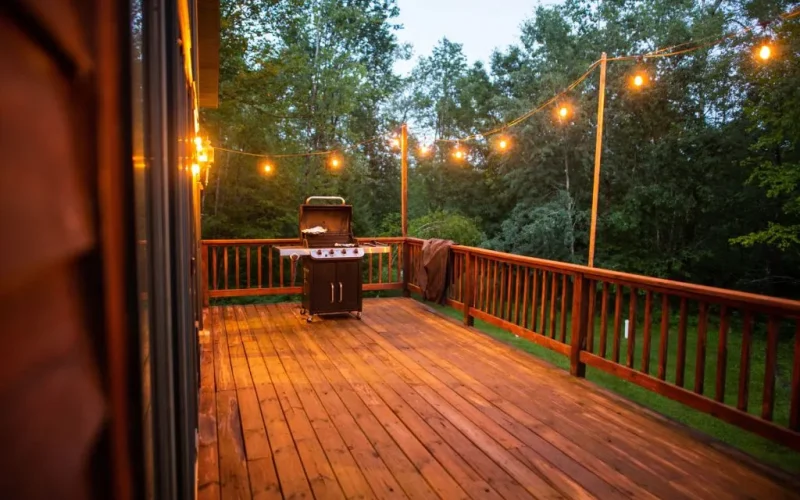
Best wood deck builders in cincinnati
What distinguishes the best wood deck builders in Cincinnati? For wood-specific installation, the critical competencies:
Species-appropriate substructure. Cedar decking doesn’t need a PT substructure treated for ground contact in the same way exposed PT framing does — but the posts and beams must be specified correctly for Ohio’s frost line (~36 inches in Hamilton County). A wood deck built on undersized or improperly treated footings heaves and shifts within a few Ohio winters.
Proper acclimation and spacing. Wood decking (especially cedar and tropical hardwood) must be acclimated on-site and gapped correctly at installation to allow for seasonal expansion and contraction. Cincinnati’s climate spans 100°F+ between January lows and August highs — a deck installed dry in winter needs end-to-end expansion gaps or it will buckle in summer.
Finishing at installation. New cedar and PT decking benefit from a pre-treatment sealer applied before or immediately after installation — applied to all six sides before the deck is assembled, including the underside and cut ends. This is the step that differentiates a properly installed wood deck from one that develops checking and splitting early.
Wood deck vs composite cost comparison
The direct wood deck vs composite cost comparison for Cincinnati homeowners in 2026:
Factor | PT pine | Cedar | Composite (mid) |
Installed cost (400 sq ft) | $7k–$11k | $10k–$16k | $14k–$20k |
10-year maintenance cost | $2k–$4k | $2k–$5k | $300–$600 |
Total 10-year cost | $9k–$15k | $12k–$21k | $14k–$21k |
Expected lifespan | 15–20 yr | 20–30 yr | 25–35 yr |
The composite decking install and pvc composite decking premium vs. PT pine is real at time of purchase — but by year 5–7, the cumulative maintenance cost of wood erodes that advantage. By year 10, total cost of ownership for cedar and mid-range capped composite decks are roughly comparable; at year 15+, composite leads significantly. The wood choice is the right one when natural material is the priority, not when upfront savings are the goal.
Best wood for outdoor decks 2026
The best wood for outdoor decks 2026 ranking for Cincinnati and SW Ohio, in honest order:
- Cedar — best premium natural wood for most Cincinnati homeowners; balance of durability, aesthetics, workability, and cost
- Ipe (tropical hardwood) — most durable natural wood, best for homeowners prioritizing longevity and willing to pay the premium
- Pressure-treated pine — best value at entry level; requires correct treatment level specification and ACQ-appropriate fasteners
- Redwood — similar performance to cedar but less available in Ohio and typically more expensive; appropriate when specified
Avoid untreated softwoods (SPF lumber) for deck surfaces in Ohio — they have no inherent rot or insect resistance and will fail within 5–8 years in Cincinnati’s climate.
Do I need a permit for a wood deck in Cincinnati?
Yes — Hamilton County Building Inspection requires a building permit for decks attached to the home or larger than 200 sq ft. The permit process verifies footing depth for Hamilton County’s frost line (~36 inches), correct ledger connection, and railing height compliance under the Ohio Residential Building Code. Empire Home Solutions pulls and manages all required permits as standard practice.
Frequently Asked Questions
How much does wood deck installation cost in Cincinnati?
In 2026, wood deck installation in Cincinnati runs $14 to $22 per square foot for pressure-treated pine, $20 to $32 for cedar, $26 to $38 for redwood, and $32 to $52 or more for tropical hardwood such as Ipe or Cumaru. For a typical 400 square foot deck, total installed cost ranges from $7,000 for pressure-treated to $26,000 or more for tropical hardwood. Hamilton County permit fees and PT substructure are included in all quotes.
How long does a wood deck last in Ohio weather?
In Cincinnati’s climate, pressure-treated pine lasts 15 to 20 years with consistent maintenance; cedar lasts 20 to 30 years; and tropical hardwood such as Ipe lasts 30 to 50 years. Ohio’s freeze-thaw cycles and humid summers accelerate degradation in wood that isn’t properly maintained. Annual or biennial sealing and staining is required for cedar and PT pine to achieve rated lifespans.
What is the best wood for a deck in Cincinnati?
For most Cincinnati homeowners, cedar is the best natural wood choice — better rot resistance than PT pine, good workability, attractive grain, and a 20 to 30 year lifespan with consistent maintenance. For maximum durability, tropical hardwood (Ipe or Cumaru) lasts 30 to 50 years but costs as much as premium composite at the installed price. Pressure-treated pine is the right entry-level choice when budget is the priority.
How often does a wood deck need to be stained?
In Cincinnati’s climate, wood decks require cleaning and sealing or staining every 1 to 2 years to maintain appearance and lifespan. A south-facing full-sun deck in SW Ohio typically needs annual treatment; a shaded or covered deck can go 2 years between treatments. Skipping maintenance accelerates surface checking, graying, and early decay — the primary reason wood decks in Ohio fail before their rated lifespan.
Do I need a permit for a wood deck in Cincinnati?
Yes. Hamilton County Building Inspection requires a permit for decks attached to the home or larger than 200 square feet. The permit verifies footing depth for Ohio’s frost line, ledger connection, and railing compliance. We pull and manage all required permits. Starting construction without a permit creates problems at resale and may require removal or remediation of unpermitted work.
Contact Us
Empire Home Solutions 16493 Bodman Rd, Mt. Orab, OH 45154 Phone: (513) 773-1567
Serving Cincinnati, Mt. Orab, Mason, Loveland, and SW Ohio.
Request a free wood deck estimate or call (513) 773-1567.
Recent Posts
Chris Kestel0 Comments
How Should Finished Basements Be Planned In Batavia?

Chris Kestel0 Comments
What Does Roofing Replacement Involve In Batavia, OH?
All Categories
Tags
basement contractor (6)
basement remodeling (6)
basement renovation (4)
basement transformation (7)
composite deck builder (5)
composite deck contractors (3)
composite decking (3)
Concrete Contractors (8)
concrete foundation contractor (3)
concrete pouring services (4)
concrete repair services (3)
covered deck ideas (12)
Custom Deck Builders (6)
deck builder (10)
deck cleaning (3)
deck contractors near me (5)
deck design and installation (3)
deck installation (13)
deck remodeling (4)
deck remodeling contractors (3)
deck services (4)
durable sidings and gutter (15)
Empire Home Solutions (60)
Expert Exterior Remodeling Contractors (4)
exterior painting services (4)
finished basement contractor (3)
general contractor (92)
general remodeling services (5)
home additions contractor (3)
house remodeling services (3)
interior painting services (3)
kitchen remodel companies (4)
kitchen remodeling contractors in Amelia (6)
kitchen renovation near me (5)
OH (10)
open deck ideas (12)
open vs covered deck (12)
painting contractors (6)
patio services (4)
pool deck resurfacing contractors (3)
remodeling contractor (6)
remodeling contractors (10)
residential deck construction in Loveland OH (3)
roof leak repair (3)
siding and gutter contractor (17)