What Makes a Finished Basement Great — Beyond Just Walls
A good contractor finishes surfaces. A great contractor delivers performance, comfort, and long-term usability.
Here are features to demand:
Moisture & Vapor Control
Don’t skip it. Inspect the foundation, install drainage, vapor barriers, sump pumps if needed. Your contractor must know the science. Without it, finishes fail.
Proper Insulation & Thermal Breaks
Walls, floors, and ceilings need insulation—and sometimes special products—for below-grade performance. Standard insulation fails in many basement scenarios.
Egress & Safety
If you plan bedrooms, you need code-compliant windows/doors. That may require cutting or lowering floors. The contractor must have structural and permit experience.
HVAC & Dehumidification
Basements have unique climate needs. You’ll need proper ducting, possibly separate HVAC zones, dehumidifiers, or exhaust systems. Don’t let your contractor ignore that.
Lighting & Layout
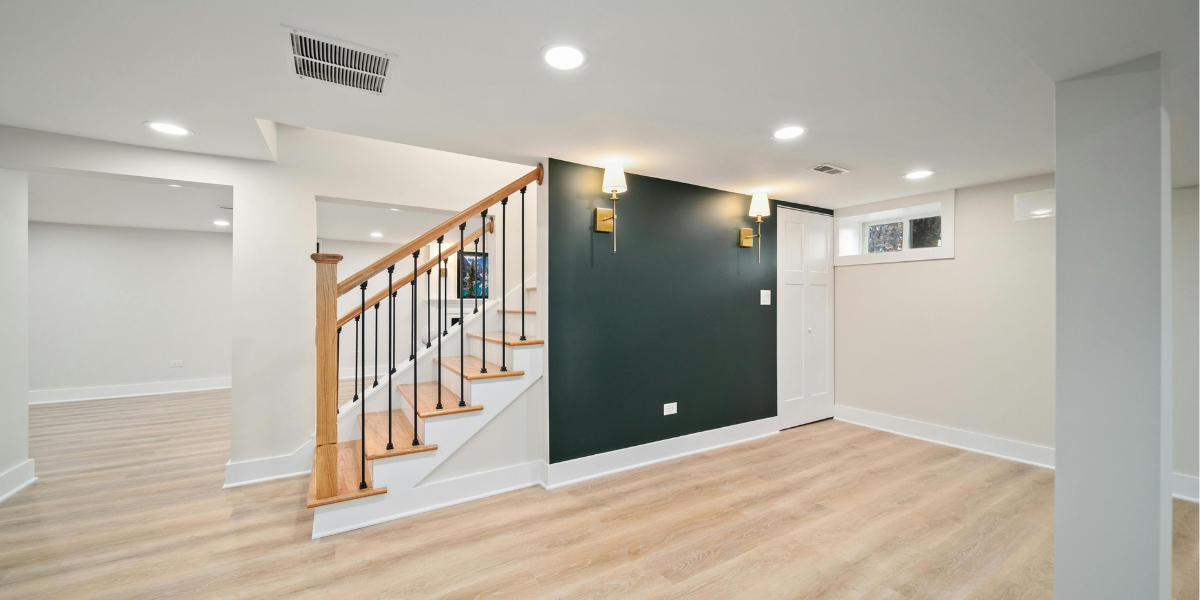
Lighting, open flow, multi-zone layout – these determine whether the basement feels welcoming or dungeon-like. A pro contractor suggests placement, layering, and focal points.
Sound Control & Ceiling Options
Drop ceilings, acoustical treatments, or painted-exposed-beam options. Select based on function (media, office, play). Ceiling choices affect future access to systems.
Longevity & Access
Doors, panels, access hatches: you’ll want to get into plumbing, wiring, or ducts later. A tight, “perfect” finish that can’t be maintained is a liability.
Competitor blogs typically talk finishes, lighting, or layout. But few advise you to demand maintenance access, warranty, and repair provisions—that’s where this blog gives you extra edge.
Mistakes to Avoid (And How to Guard Against Them)
Don’t let these common blunders sink your project.
- Skipping proper waterproofing first. Don’t frame until walls are dry.
- Accepting vague contracts. Details save you later.
- Trusting lowest bid blindly. If a bid is too low, something’s cut.
- Neglecting ceiling height. You need clearance above ductwork and structural members.
- Under-planning electrical/tech. Ethernet, speakers, smart home—wire now.
- Ignoring ventilation & dehumidification. Humid basements ruin finishes.
- Letting change orders get loose. Document, sign, price all changes.
- Not maintaining documentation. Permits, receipts, warranty—all must be filed.
These mistakes show up in forums (e.g. Houzz) where homeowners share regrets like “wish I had laid tape to test layout before building walls”
Guard yourself by insisting on process and oversight.
Sample Project: How We Do It at Empire Home Solutions
Here’s how Empire Home Solutions might tackle a 1,000 ft² basement project to show you our way of thinking.
- Pre-inspection & moisture mapping. We test wall moisture, check footing drainage, locate cracks.
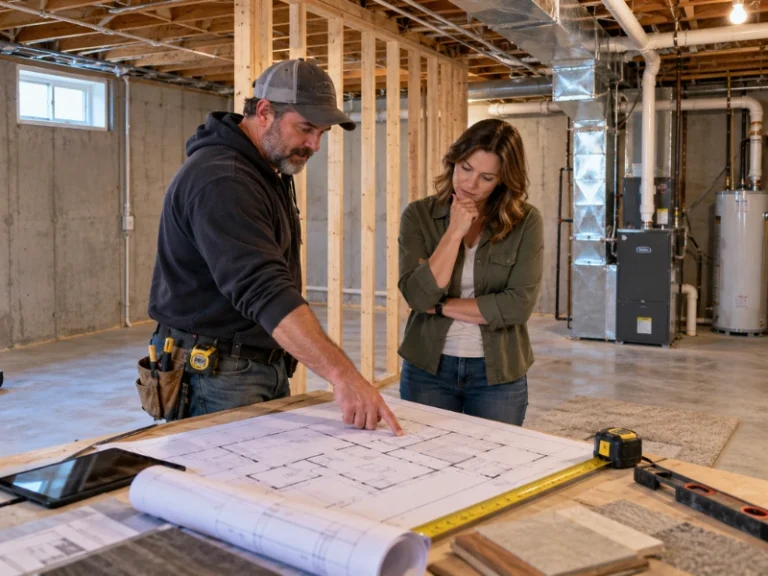
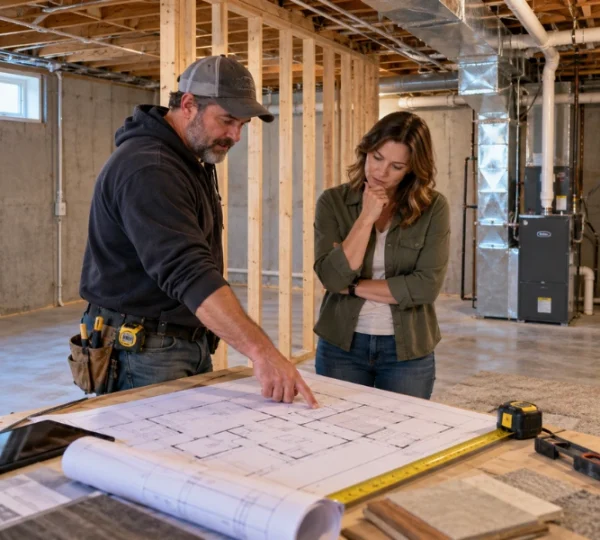
- Concept layout & client review. We propose 2–3 arrangements for living, media, bath, storage.
- Permits & structural plans. We hire engineer if needed, submit for building permits.
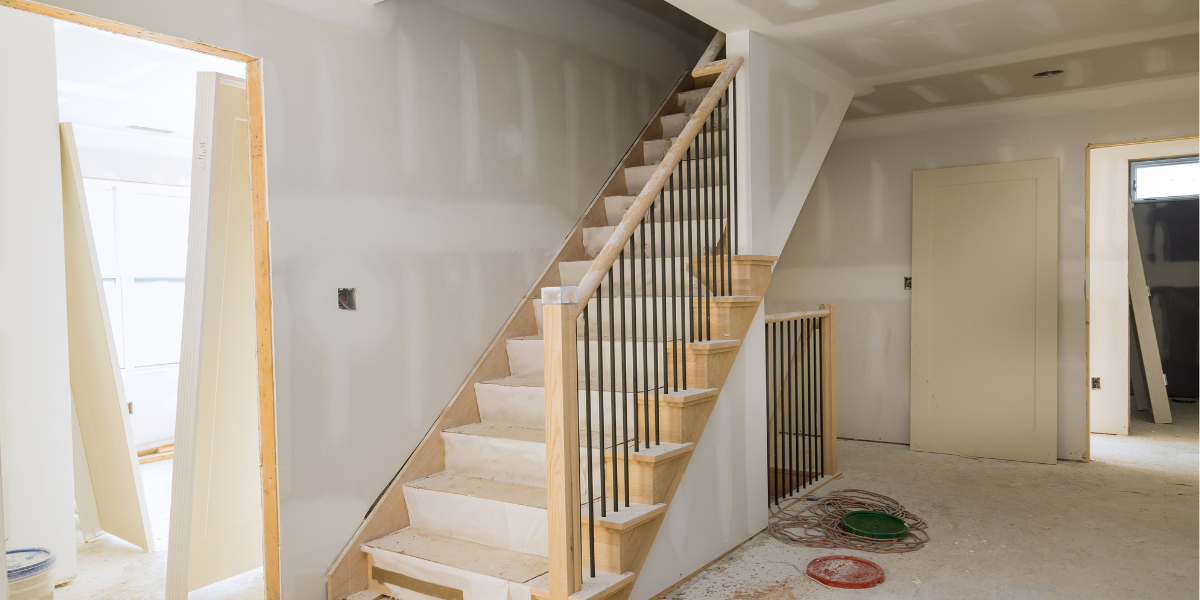
- Infrastructure phase. Waterproofing, sump install, framing, mechanical rough-ins, plumbing, wiring.
- Insulation, vapor barrier, drywall. We use proven systems for below-grade walls.
- Finishes. Flooring, trim, lighting, cabinetry, painting.
- Walkthrough, punch, warranty. We walk with you, fix snags, deliver warranty paperwork.
Outcome: A fully functional space built to last. No moisture issues. Good airflow. And yes—resale value.
Conclusion
Hiring a finished basement contractor is one of those decisions that determines whether your dream space becomes a nightmare. You deserve someone who sees beyond drywall. Someone who solves, not covers up.
You now have a deeper lens: how to vet, what to demand, what costs lurk, what good performance looks like. Use it. Don’t take shortcuts.
When done right, your finished basement isn’t just extra rooms. It’s usable square footage, better home health, and value that shows for decades.
Call to Action
Ready to talk specifics? Reach out to Empire Home Solutions today for a free site assessment & quote. Let us help you pick the right layout, spot hidden issues, and build a space you’ll love for years to come.