

- 16493 Bodman Rd Mt. Orab, OH 45154
- info@empirehome.solutions
- Deck Division: 513-513-DECK(3325)
- Office: (513) 773-1567
Siding Installation and Repair: 2026 Cost Guide for Ohio Homeowners
Custom deck building in 2026 costs anywhere from $4,000 to $22,000+, and most pricing guides online stop right there. No context, no breakdown, no honest answer about what that number actually includes. This guide is different. Whether you’re planning a simple 10×10 backyard platform or a full multi-level composite build, we break down materials, labor, permits, and the hidden costs that blow most budgets before you find out about them.
At Empire Home Solutions, we’ve helped hundreds of Ohio homeowners build decks they actually use, not just ones that look good in the quote. We know what things cost, where projects go sideways, and how to keep your build on budget from day one. That’s the perspective behind every number in this guide.
Key Takeaways
- Deck builds range from $4,000–$22,000+ depending on size and material
- Composite decking costs 2–3x more upfront but requires far less maintenance
- Labor is 40–60% of your total cost, so always get written quotes
- Hidden costs like permits, railings, and footings can add $2,000–$5,000
- Empire Home Solutions offers free, no-obligation estimates across Ohio
What Does Siding Installation Cost in Ohio in 2026?
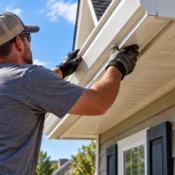
Let’s start with the number you actually came here for. Most Ohio homeowners spend between $8,000 and $16,000 for a full siding replacement on a standard two-story home. Smaller ranches or single-story homes might come in closer to $5,000. Larger homes with complex rooflines, multiple gables, or architectural trim? Budget $20,000 or more. For homeowners searching for siding contractors in Indian Hill OH, those numbers tend to sit at the higher end given the larger home sizes and premium material expectations in that market.
The number changes based on five things: square footage, material choice, existing wall condition, labor rates in your area, and how much trim and flashing work the job requires. We’ll break each one down.
2026 Siding Cost by Material (Installed Price Per Square Foot)
These figures include materials and labor for a standard installation. They do not include demolition of old siding, structural repairs, or permit fees.
Material | Low End | High End | Lifespan |
Vinyl siding | $4 | $12 | 20-40 years |
Fiber cement | $8 | $18 | 30-50 years |
Engineered wood | $6 | $14 | 20-30 years |
Steel siding | $10 | $20 | 40-70 years |
Aluminum siding | $7 | $15 | 20-40 years |
Wood (cedar) | $10 | $22 | 20-40 years |
These are real-world installed figures, not material-only costs. That distinction matters more than most guides let on.
What Drives the Final Number Up
A few things add costs that most homeowners don’t anticipate until the estimate arrives.
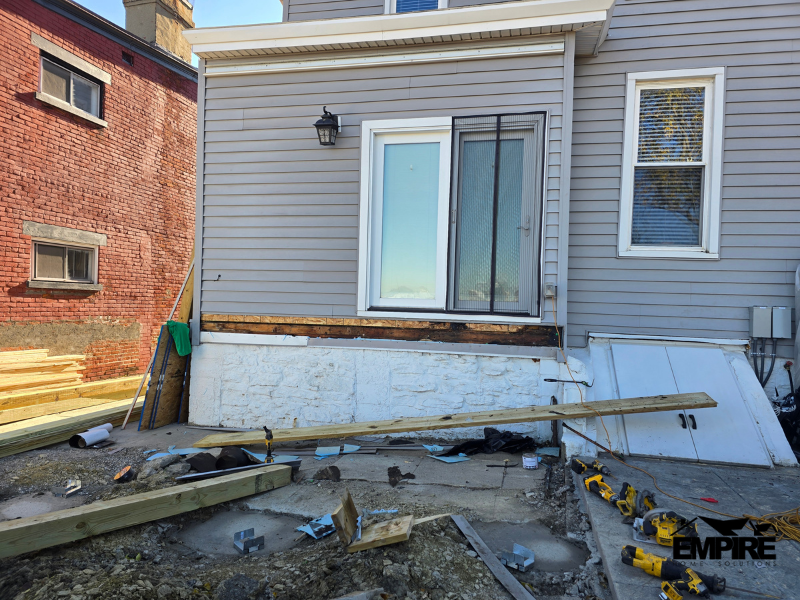
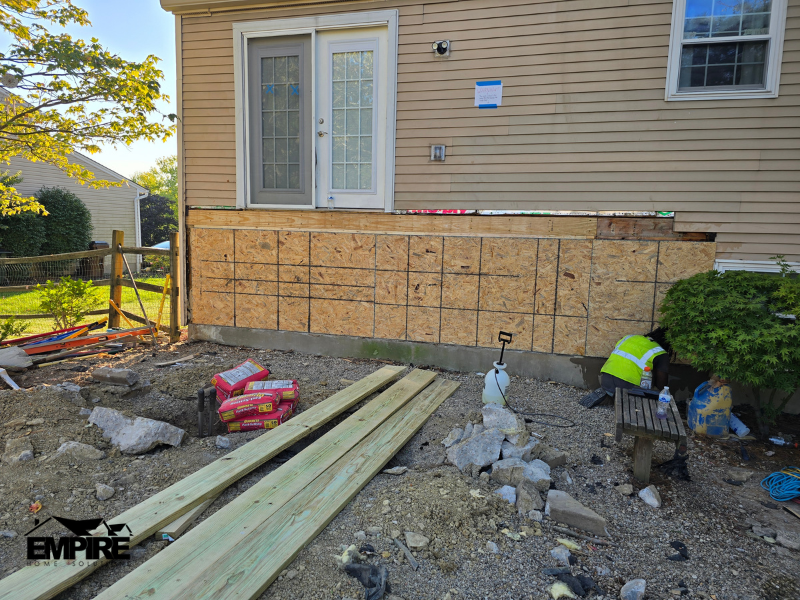
Rotted or damaged sheathing. Ohio’s freeze-thaw cycles are hard on older homes. When we pull off siding on a house built before 1990, there’s a decent chance we find soft spots in the OSB or plywood underneath. Replacing sheathing adds $1,500 to $4,000 depending on how far it spreads.
Permit fees. Most Ohio municipalities require a permit for full siding replacement. You can verify your local requirements through the Ohio Board of Building Standards. Budget $150 to $400 depending on your county. Empire Home Solutions handles permit applications on every project, so that’s one less thing to manage.
Trim, soffits, and fascia. These are often quoted separately. If your trim is original wood and hasn’t been wrapped, expect an additional $800 to $2,500 to cap it properly.
Disposal. Old siding has to go somewhere. Dumpster fees and disposal typically add $300 to $700 to the total.
Siding Materials: What Actually Works in Ohio
Ohio weather is genuinely hard on exterior materials. Summers are humid. Winters hit hard. You get freeze-thaw cycles in spring and fall that expand and contract everything. Material choice matters more here than it does in a dry southwestern climate.
Vinyl Siding: The Practical Choice
Vinyl is what most Ohio homeowners choose, and for good reason. It’s affordable, widely available, and modern profiles look significantly better than the thin vinyl of 20 years ago. Properly installed with correct flashing and house wrap, it handles Ohio winters without issue.
The catch is installation quality. Vinyl needs room to expand and contract. Contractors who fasten it too tightly create buckling problems within two to three seasons. We see this constantly on houses where the previous installer cut corners on fastener spacing. It’s fixable, but it shouldn’t happen in the first place.
For most Ohio homes, premium vinyl with an insulated backer is the sweet spot. It adds $1 to $3 per square foot over standard vinyl but noticeably improves wall performance and reduces drafts.
Fiber Cement Siding: Built for Longevity
Fiber cement, most commonly James Hardie products, is the premium choice for homeowners who plan to stay in the house long-term or want to maximize resale value. It doesn’t rot. It resists impact better than vinyl. It takes paint well and holds color longer than wood.
The honest tradeoff: it’s heavier, harder to cut, and more labor-intensive to install. That’s why fiber cement installation costs roughly 40-60% more than vinyl. If you’re comparing siding installation contractors in Indian Hill OH or other higher-end Ohio markets, fiber cement is often the expected standard.
It’s worth it for the right house. For a starter home you’re selling in three years, vinyl is probably the smarter financial call.
Engineered Wood: The Middle Ground
Products like LP SmartSide split the difference. They look more like natural wood than vinyl, cost less than fiber cement, and perform well in Ohio’s climate when properly installed and painted. They do require more maintenance than fiber cement you’ll need to repaint every 7 to 10 years but for homeowners who want the wood aesthetic without the wood maintenance headaches, it’s a solid option.
Siding Repair vs. Full Replacement: How to Actually Decide
This is a question we get constantly. And honestly, it depends on what’s driving the problem.
Targeted repair makes sense when the damage is isolated. A storm knocks a few panels loose, impact from a ladder cracks two sections, or a bird works its way behind a soffit run. If the underlying sheathing and moisture barrier are intact, repair is the right call. It’s faster and significantly cheaper.
Full replacement makes sense when the damage is widespread, when the existing installation has systemic problems like incorrect fastening or missing house wrap, or when the siding is simply at end of life. Most vinyl siding from the 1980s and early 1990s is approaching that point. It’s thin, brittle, and faded in ways that repair won’t fix.
Warning Signs That Repair Won’t Be Enough
These are the things we find during on-site assessments that usually indicate replacement is the better path:
- Soft spots or visible moisture staining at multiple points along the wall
- Siding that has pulled away from the wall in more than one location
- Mold or mildew appearing on interior walls near exterior surfaces
- Panels that crack easily when pressed a sign the material has become brittle
- Multiple storm damage claims on the same areas over several seasons
If you’re seeing two or more of these, an assessment from qualified siding installers near me in Ohio will almost certainly confirm replacement is the more cost-effective long-term decision.
Why Empire Home Solutions for Siding in Ohio
There are plenty of siding installation contractors in Ohio. Here’s the straightforward reason homeowners keep choosing Empire Home Solutions.
We don’t hand your project off to a subcontractor you’ve never met. Our crew does the work. That means the person who walks the job with you and writes the estimate is connected to the team swinging the hammer. Accountability doesn’t disappear once the contract is signed.
We’re also transparent about what we find. If we pull off old siding and discover rotted sheathing underneath, we document it with photos, walk you through what needs to happen, and get your approval before spending a dollar more than the original scope. No surprise charges on invoice day.
And we pull permits. Every time. Any siding contractor who suggests skipping the permit is saving themselves paperwork at your expense. An unpermitted siding job can create real problems when you go to sell.
The Siding Installation Process: What to Expect
A lot of homeowners don’t know what happens between signing the contract and seeing the finished product. Here’s how a standard project runs.
Day 1: Prep and demo. We protect landscaping, remove old siding sections as needed, and assess wall conditions before anything new goes up. This is when we find surprises, if there are any.
Day 1-2: Weather barrier and flashing. House wrap goes up with taped seams. Flashing is installed or corrected around every window, door, and penetration. This is the step that separates a quality installation from one that leaks in three years.
Day 2-4: Panel installation. Siding panels are aligned, fastened to correct spacing, and cut cleanly around all transitions. Trim work runs alongside as each section is completed.
Final day: Inspection and walkthrough. We walk the full exterior with you before sign-off. Punch list items get addressed on the spot, not two weeks later.
Total timeline for a standard two-story home is typically 3 to 5 days of active work. Add 1 to 3 weeks for permit approval if required in your municipality.
Frequently Asked Questions
1. How much does siding installation cost per square foot in Ohio?
Vinyl runs $4 to $12 per square foot installed; fiber cement runs $8 to $18. Total project costs typically land between $8,000 and $16,000 for vinyl and $14,000 to $26,000 for fiber cement on a standard Ohio home.
2. How long does siding installation take in Ohio?
Most projects take 3 to 5 days of active work. Factor in 1 to 3 weeks for permit approval before the crew starts, depending on your municipality.
3. How do I find reliable siding installers near me in Ohio?
Get at least three written quotes from licensed, insured contractors. Ask whether they pull permits and who actually does the work. If they can’t answer both questions clearly, keep looking.
4. What siding material is best for Ohio’s climate?
Vinyl with an insulated backer handles Ohio’s freeze-thaw cycles well and costs less to install. Fiber cement is the better long-term investment for homeowners staying put or selling in higher-value markets like Indian Hill or Dublin.
5. Does new siding increase home value in Ohio?
Yes. New siding typically returns 67 to 80% of its cost in added resale value. In competitive Ohio markets, an updated exterior can also shorten days on market.
Conclusion
Siding installation in Ohio in 2026 isn’t a small decision. The material you choose, the contractor you hire, and the details they get right on installation day all determine whether you’re calling someone back in three years or enjoying a clean, weather-tight exterior for the next two decades.
Know your material options. Get written quotes. Make sure whoever you hire pulls permits and doesn’t subcontract the job to someone you’ve never met.
If you’ve been searching for siding installers near me in Ohio and keep landing on pages that won’t give you a straight answer, Empire Home Solutions is ready to walk your property and give you a real number.
Get Your Free Siding Estimate Today
Contact Empire Home Solutions or call us at (513) 773-1567 we provide free estimates for siding installation and repair across Ohio. We assess your current siding, walk you through your material options, and deliver a written quote that covers everything, materials, labor, permits, and any site-specific conditions we find.
No surprises. No pressure. Just honest work from a team that stands behind it.
Recent Posts

Chris Kestel0 Comments
How Does Vinyl Siding Installation Work in Mt. Orab?
Chris Kestel0 Comments
Which Siding Contractors Near Me Serve Mt. Orab, OH?
All Categories
Tags
basement contractor (6)
basement remodeling (6)
basement renovation (4)
basement transformation (7)
composite deck builder (5)
composite deck contractors (3)
Concrete Contractors (8)
concrete foundation contractor (3)
concrete pouring services (3)
concrete repair services (3)
covered deck ideas (12)
Custom Deck Builders (6)
deck builder (10)
deck cleaning (3)
deck construction (3)
deck contractors near me (5)
deck design and installation (3)
decking contractors near me (3)
deck installation (12)
deck remodeling (4)
deck remodeling contractors (3)
deck services (4)
durable sidings and gutter (15)
Empire Home Solutions (60)
Expert Exterior Remodeling Contractors (4)
exterior painting services (4)
finished basement contractor (3)
general contractor (92)
general remodeling services (5)
home additions contractor (3)
house remodeling services (3)
interior painting services (3)
kitchen remodel companies (4)
kitchen remodeling contractors in Amelia (6)
kitchen renovation near me (5)
OH (10)
open deck ideas (12)
open vs covered deck (12)
painting contractors (6)
patio services (4)
pool deck resurfacing contractors (3)
remodeling contractor (6)
remodeling contractors (10)
siding and gutter contractor (17)
trex decking installation (3)