

- 16493 Bodman Rd Mt. Orab, OH 45154
- info@empirehome.solutions
- Deck Division: 513-513-DECK(3325)
- Office: (513) 773-1567
Deck and Patio Contractors: How to Choose the Right Builders for Your Outdoor Project
The right deck and patio contractors do more than show up and build. They handle design, permits, structural framing, material sourcing, and final inspection. The wrong ones take a deposit, do sloppy work, and stop answering calls. Knowing how to tell the difference before you sign anything is the most valuable thing you can do before starting any outdoor project.
This guide covers what separates good contractors from bad ones, what questions to ask when comparing quotes, how to choose between a deck and a patio based on your yard and budget, and the red flags that show up in almost every contractor horror story. If you’re planning an outdoor build in Ohio in 2026, this is worth reading before you call anyone.
Key Takeaways
- Always verify licensing, insurance, and permit history before signing
- Get three written quotes and compare the same scope of work
- Decks cost more per sq ft than patios but suit sloped yards better
- The cheapest bid rarely ends up being the cheapest project
- A written labor warranty is non-negotiable
What Good Deck and Patio Contractors Actually Handle
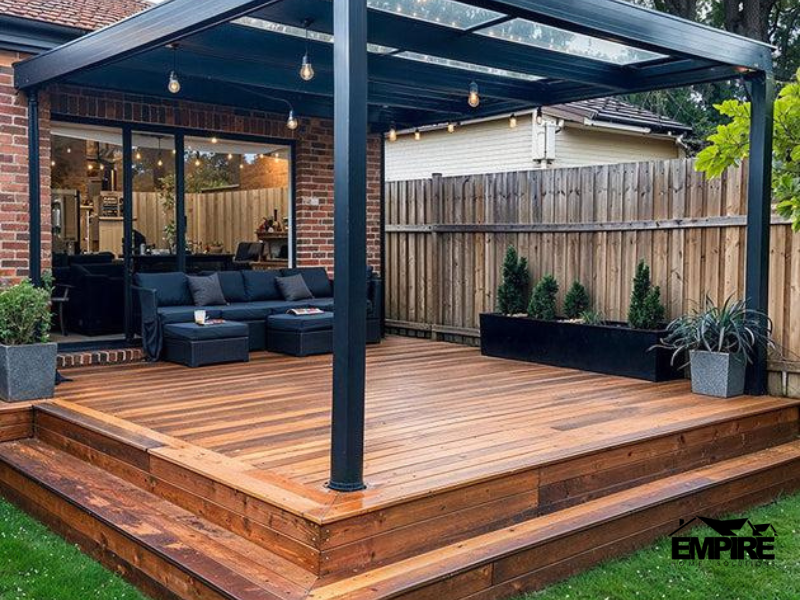
Most homeowners think the job starts when the crew shows up. It doesn’t. A legitimate contractor manages the full process: design consultation, material selection, permit applications, site prep, structural work, installation, and final inspection. Each phase has decisions that affect the finished result, and cutting any one of them short creates problems that surface after the contractor is gone.
Design and Drainage
Design isn’t just about how the space looks. It’s about how it performs. A good contractor talks about water drainage early in the conversation, especially for patios. Ohio gets significant spring rainfall, and a patio that isn’t graded correctly pools water against the house or foundation. If a contractor doesn’t raise drainage during your first meeting, ask about it directly.
For decks, the design conversation should cover load requirements, how the ledger attaches to the home, and whether the joist spacing is appropriate for the decking material you’re using. These aren’t details to figure out on the fly.
Permits and Code Compliance
Most deck and patio projects in Ohio require a permit. Attached decks, elevated structures, and anything over a certain square footage typically fall under local building code jurisdiction. You can verify Ohio’s residential construction requirements through the Ohio Board of Building Standards.
Any contractor who suggests skipping the permit is putting you at risk. An unpermitted structure can void homeowner’s insurance claims, create problems at sale, and leave you liable if someone is injured on it. The contractor should pull the permit and handle the application as part of the project scope.
How to Vet Deck and Patio Contractors Before You Hire
This is where most homeowners move too fast. They get a quote or two, pick the one that sounds reasonable, and find out a few weeks into the job why that price was so low.
Verify Licensing and Insurance
Ask for certificates of insurance directly. Not a verbal assurance. The actual document. A legitimate contractor carries general liability coverage and workers’ compensation. If a worker gets hurt on your property and the contractor isn’t properly covered, you can be held liable.
Licensing requirements vary by Ohio municipality, but a credible contractor produces credentials without hesitation. Hesitation or vagueness on this question is a red flag worth taking seriously.
Get Written Quotes and Compare the Same Scope
A written quote should itemize materials, labor, permit fees, timeline, and what’s specifically excluded. Hidden costs show up in projects where the initial quote was vague. Disposal of old materials, site grading, and concrete footings are real line items that should appear on paper before you sign.
When comparing deck and patio builders near me in Ohio, make sure you’re actually comparing the same scope of work. A $12,000 quote and a $17,000 quote for the same deck can be very different once you see what each one includes.
Ask Who Does the Work
Some contractors function as general contractors who subcontract the actual labor. That’s not automatically a problem, but it means the person you interviewed isn’t the one building your deck. Ask directly. Is this your crew or are you subcontracting? If subcontractors are involved, are they licensed and insured too? Any contractor worth hiring answers this without hesitation.

Deck vs. Patio: Which Makes More Sense for Your Yard
Before calling anyone, it helps to know which direction you’re heading. Decks and patios solve different problems and come with different costs.
Decks
Decks are elevated structures, usually composite or wood, attached or freestanding. They work well for sloped yards where a ground-level patio isn’t practical. Composite costs more upfront but needs almost no maintenance. Pressure-treated wood is cheaper but needs sealing every two to three years.
Ohio’s freeze-thaw cycles require footings that extend below the frost line, typically 36 to 42 inches. A contractor who doesn’t mention frost depth when quoting your deck is one worth questioning on this point.
Patios
Patios sit at grade and are typically concrete, pavers, or natural stone. Concrete is the most affordable option. Paver patios cost more but individual units can be replaced without disturbing the whole surface, which matters long-term.
For homeowners searching for deck and patio builders in Amelia OH, pavers are a popular choice for yards with existing landscaping since they can be shaped around features without major disruption to the surrounding area.
Cost Comparison
Concrete patios run $8 to $18 per square foot installed. Paver patios run $15 to $30 per square foot. Composite decks with railing run $25 to $45 per square foot. The right choice depends on your yard’s grade, your budget, and how you plan to use the space long-term.
Type | Cost Per Sq Ft (Installed) | Lifespan | Maintenance Level |
Concrete patio | $8 – $18 | 25 – 50 years | Low |
Paver patio | $15 – $30 | 20 – 30 years | Low to moderate |
Natural stone patio | $20 – $40 | 30 – 50+ years | Low |
Pressure-treated wood deck | $15 – $25 | 15 – 25 years | High (seal every 2 – 3 yrs) |
Composite deck with railing | $25 – $45 | 25 – 30 years | Low |
PVC deck with railing | $30 – $50 | 30 + years | Very low |
These are fully installed figures including labor and standard footings. Permit fees, demolition of existing structures, and custom features like pergolas or built-in seating are not included.
Red Flags Worth Knowing Before You Sign
Most contractor problems were visible before the contract was signed. Here are the most common ones.
No verifiable business history. A contractor operating from only a personal cell and a Facebook page isn’t automatically untrustworthy, but it’s a reason to dig deeper. Search the business name, check Google reviews, and look for a BBB profile before moving forward.
Oversized deposit requests. A reasonable deposit is 10 to 30% of the project cost. Requests for 50% or more upfront are unusual and worth questioning. Legitimate contractors have supplier accounts and don’t need half the project funded before breaking ground.
Pressure to decide immediately. A contractor who tells you a price is only good today is using a pressure tactic. A confident contractor with real work in the pipeline doesn’t need to rush your decision.
No written contract. Never start a project without a signed contract that specifies scope, materials, timeline, payment schedule, and what happens if unexpected site conditions come up. A verbal agreement is not protection.
Why Empire Home Solutions for Deck and Patio Work in Ohio
There are a lot of deck and patio contractors in Ohio. Here’s what actually makes a difference when choosing one.
Empire Home Solutions uses its own crew on every project. Not subcontractors brought in for the week. The same team that walks your property and writes the estimate is the one doing the build. That means one point of accountability from first conversation to final walkthrough.
We pull permits on every qualifying project, carry full liability and workers’ compensation coverage, and put everything in writing before a single tool comes out. We also work across Ohio, including with homeowners looking for deck and patio builders near me who want a contractor that understands how to build for Ohio’s climate. Freeze-thaw cycles, wet springs, and hot summers all affect how outdoor structures should be built and what materials hold up best.
Frequently Asked Questions
1. How do I find reputable deck and patio contractors near me?
Check Google reviews and BBB ratings, ask neighbors for referrals, and get at least three written quotes. Verify licensing and insurance before signing anything.
2. How much does a deck or patio cost in Ohio in 2026?
Concrete patios run $8 to $18 per square foot installed. Paver patios run $15 to $30. Composite decks with railing run $25 to $45. Total cost depends on size, material, and design complexity.
3. Do I need a permit for a deck or patio in Ohio?
Most attached decks and elevated structures require a permit. Patios may require one depending on size and local municipality. Your contractor should handle the permit application as part of the project.
4. How long does deck or patio construction take?
A standard deck takes 5 to 8 days of active construction. A patio takes 3 to 5 days. Add 1 to 3 weeks for permit approval before work begins.
5. What should a deck or patio contract include?
Scope of work, materials with brand and grade specified, project timeline, payment schedule, permit responsibility, labor warranty, and terms for unexpected site conditions. If any of those are missing, ask before signing.
Conclusion
Choosing the right deck and patio contractors comes down to verified credentials, written quotes, a clear build process, and a crew that actually does what they said they would. Most bad contractor experiences trace back to skipping one of those steps early on.
Do the vetting before you commit. Get everything in writing. Make sure permits are pulled and the labor is warranted, not just the materials.
Get a Free Estimate From Empire Home Solutions
We offer free estimates for deck and patio projects across Ohio. We walk your property, talk through your options, and give you a written quote covering materials, labor, permits, and any site-specific conditions we find. Contact Empire Home Solutions or call us at (513) 773-1567.
No pressure. No vague numbers. Just a clear scope from a team that builds outdoor spaces the right way.
Recent Posts
Chris Kestel0 Comments
How Should Finished Basements Be Planned In Batavia?
Chris Kestel0 Comments
What Does Roofing Replacement Involve In Batavia, OH?
All Categories
Tags
basement contractor (6)
basement remodeling (6)
basement renovation (4)
basement transformation (7)
composite deck builder (5)
composite deck contractors (3)
composite decking (3)
Concrete Contractors (8)
concrete foundation contractor (3)
concrete pouring services (4)
concrete repair services (3)
covered deck ideas (12)
Custom Deck Builders (6)
deck builder (10)
deck cleaning (3)
deck contractors near me (5)
deck design and installation (3)
deck installation (13)
deck remodeling (4)
deck remodeling contractors (3)
deck services (4)
durable sidings and gutter (15)
Empire Home Solutions (60)
Expert Exterior Remodeling Contractors (4)
exterior painting services (4)
finished basement contractor (3)
general contractor (92)
general remodeling services (5)
home additions contractor (3)
house remodeling services (3)
interior painting services (3)
kitchen remodel companies (4)
kitchen remodeling contractors in Amelia (6)
kitchen renovation near me (5)
OH (10)
open deck ideas (12)
open vs covered deck (12)
painting contractors (6)
patio services (4)
pool deck resurfacing contractors (3)
remodeling contractor (6)
remodeling contractors (10)
residential deck construction in Loveland OH (3)
roof leak repair (3)
siding and gutter contractor (17)