

- 16493 Bodman Rd Mt. Orab, OH 45154
- info@empirehome.solutions
- Deck Division: 513-513-DECK(3325)
- Office: (513) 773-1567
Deck Installation: Your Real-World Guide to Building a Deck That Actually Lasts
A proper deck installation… honestly, it changes everything about your backyard. It kinda sounds dramatic, but it’s true. A deck becomes the place where life slows down a bit. A coffee spot. A grill zone. A chill space. A whatever-you-want place. But building it? Yeah. That part can get confusing real fast.
There’s the materials. The codes. The design. The contractor who talks in circles. The one who doesn’t call back. The one who feels sketchy. And the one who gives you a price so low you almost know something’s wrong.
And then—thankfully—you find companies like Empire Home Solutions. They make the whole “deck installation thing” feel… normal. Smooth. Less stressful. They explain what’s happening, why it matters, and what to expect. It feels like having an actual human helping you. Not someone trying to upsell you on stuff you don’t need.
Anyway. In this guide, we’re breaking everything down in plain, straight-up language. No stiff “industry jargon” paragraphs. No robotic nonsense. Just real talk about how deck installation works, what to watch for, what materials make sense, and how to protect your investment so your deck doesn’t crumble after one rough winter.
Let’s jump in.
Key Takeaways
- A successful deck installation depends heavily on planning, materials, and skilled craftsmanship.
- Composite decking often feels pricey upfront but saves loads in maintenance later.
- Bad installation = problems like warping, rot, wobbling posts, water intrusion.
- Picking the right contractor matters. A lot.
- Empire Home Solutions offers the communication + reliability that most homeowners wish every contractor had.
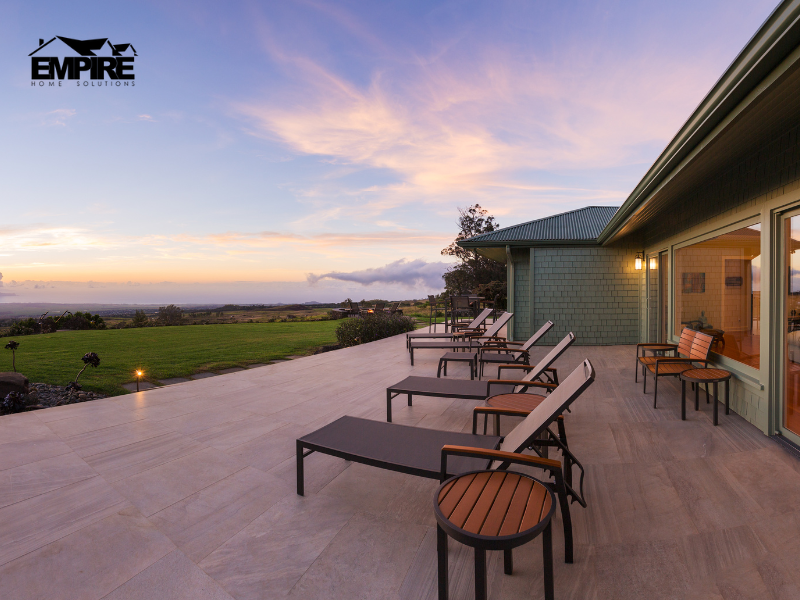
Understanding the Deck Installation Process (So You Don’t Get Lost)
Most homeowners don’t see the behind-the-scenes stuff during a deck installation. They assume it’s just wood boards and screws. It’s not. There’s a whole technical checklist happening before a single board gets installed.
Below is the real process — explained simply.
1. Site Evaluation & Planning
Builders shouldn’t just show up with a tape measure. They should actually evaluate your yard. Like… walk around. Look at the slope. Feel the soil. Study how the sun hits your backyard. These details affect your deck more than you think.
What a Good Builder Checks
- Soil stability
- Drainage patterns
- Access points to the house
- Existing structures
- Property boundaries
- Sun + shade angles
Some builders skip this step. And those are usually the ones who cause problems down the road.
Empire Home Solutions?
They take this part seriously. (Which is probably why people trust them so much.)
Small Tip:
Ask your contractor to note their observations in writing. Clears up confusion later.
2. Designing the Deck
This is the fun part. Also the part where people get overwhelmed.
Choosing the Deck Shape
Rectangular. Curved. Multi-level. Wraparound. Floating platform. Each style affects cost and installation complexity.
Thinking About How You’ll Use It
Most homeowners don’t think about future furniture or how people will move around the deck. But you should.
Questions to ask yourself:
- Will you eat outside often?
- Need space for a grill?
- Want privacy in one area?
- Planning on a hot tub later?
- Kids? Pets?
Small choices now = huge comfort later.
Example:
If your yard slopes down, building a multi-tier deck usually works better than forcing one tall platform. Looks cleaner too.
3. Choosing Materials (A Big Decision)
Material selection is one of the most influential parts of a deck installation. It affects cost, appearance, maintenance, and lifespan.
Here’s the honest breakdown.
Wood Decking
Warm. Natural. Affordable.
But… maintenance heavy.
- Needs staining
- Can splinter
- Fades with sun
- Vulnerable to moisture
Composite Decking
Probably the most popular now.
- Low maintenance
- No splinters
- Long warranties
- Looks consistent
- More resistant to fading
PVC Decking
Top tier.
Also top price.
- Fully waterproof
- Super durable
- Incredible lifespan
Which Should You Choose?
Composite tends to be the sweet spot for most families. PVC is for homeowners who never want to think about maintenance again. Wood works for tight budgets but needs commitment.
4. Permits, Codes & Engineering
Not fun. But required. Deck collapses happen more often than people know. Over 6,000 incidents a year. Mostly from improper installation.
Permits Protect You
They ensure:
- Safe load capacity
- Strong footings
- Correct railing height
- Proper ledger flashing
- Structural integrity
If a contractor says:
“We can skip the permit.”
Yeah… don’t walk.
Run.
5. Construction: The Part Everyone Thinks Is Simple
Construction is where precision matters. A skilled installer’s work shows immediately. Straight cuts. Clean spacing. Sturdy structure.
Footings & Foundation
If the foundation is shaky, everything else is too.
Footings need to be:
- Deep enough
- Set correctly
- Level
- Reinforced if needed
Framing & Ledger Board
The framing is the skeleton. The thing that makes everything safe.
The ledger board—the part attached to your home—is the #1 cause of deck failures. If someone skips the flashing? Water damage. Rot. Mold. Structural issues.
Decking Boards & Railings
Boards should be spaced consistently.
Railings should feel solid.
Nothing should wobble. Ever.
Small Example:
If you lean on the railing and it shifts even a little? Something’s wrong.

How to Choose the Right Company for Deck Installation
Choosing the right contractor is half the battle. Maybe more than half.
Check Their Portfolio
Not just pretty photos. Look for real jobs.
Signs of quality:
- Clean lines
- Tight joints
- Even stairs
- Solid railing work
- Options for both composite + wood
- Multiple styles
If their portfolio feels “generic,” it might actually be stock photos.
Ask About Communication
This one matters more than most people think.
Good contractors:
- Answer questions
- Follow up
- Explain timelines
- Tell you what’s next
- Are honest about budget
This—again—is why Empire Home Solutions earns trust fast. They actually communicate. Homeowners appreciate that.
Compare Pricing Smartly
The lowest bid is rarely the safest.
But the highest doesn’t always mean best either.
What Affects Cost
- Materials
- Deck size
- Railings
- Stairs
- Permits
- Add-ons (lights, pergola, privacy fence)
Average Price Ranges
- Wood: $18–$30 per sq. ft.
- Composite: $40–$65 per sq. ft.
- PVC: $60–$85 per sq. ft.
Ask for a detailed, line-by-line estimate. No vague quotes.
FAQs About Deck Installation
1. How long does deck installation usually take?
Typically 1–3 weeks. Depends on weather, size, material, and complexity.
2. What’s the best material for long-term durability?
PVC lasts longest, but composite is the most cost-effective over time.
3. Should my deck be attached or floating?
Attached decks cost less but require more engineering. Floating decks offer flexibility.
4. Do I really need a permit?
Yes. Almost always. It keeps your project legal and safe.
5. Will a deck installation increase home value?
Absolutely. Especially composite decks—they’re seen as low-maintenance upgrades.
Conclusion
A great deck installation isn’t luck. It’s planning, skill, communication, and choosing the right team to bring it to life. When the foundation is solid, the materials are chosen wisely, and the contractor actually cares about the result, you get a deck that becomes part of your everyday life—something sturdy, beautiful, and built to last.
That’s why so many homeowners choose Empire Home Solutions—because they build decks with the kind of care people wish every contractor offered.
CTA
Ready to build a backyard space that feels like an extension of your home?
Reach out to Empire Home Solutions today for a friendly, pressure-free consultation. Your dream deck is closer than you think.
Recent Posts
Chris Kestel0 Comments
Which Roof Replacement Contractor Should Batavia Trust?
Chris Kestel0 Comments
How Should Finished Basements Be Planned In Batavia?
All Categories
Tags
basement contractor (6)
basement remodeling (6)
basement renovation (4)
basement transformation (7)
composite deck builder (5)
composite deck contractors (3)
Concrete Contractors (8)
concrete foundation contractor (3)
concrete pouring services (4)
concrete repair services (3)
covered deck ideas (12)
Custom Deck Builders (6)
deck builder (10)
deck cleaning (3)
deck contractors near me (5)
deck design and installation (3)
decking contractors near me (3)
deck installation (13)
deck remodeling (4)
deck remodeling contractors (3)
deck services (4)
durable sidings and gutter (15)
Empire Home Solutions (60)
Expert Exterior Remodeling Contractors (4)
exterior painting services (4)
finished basement contractor (3)
general contractor (92)
general remodeling services (5)
home additions contractor (3)
house remodeling services (3)
interior painting services (3)
kitchen remodel companies (4)
kitchen remodeling contractors in Amelia (6)
kitchen renovation near me (5)
OH (10)
open deck ideas (12)
open vs covered deck (12)
painting contractors (6)
patio services (4)
pool deck resurfacing contractors (3)
remodeling contractor (6)
remodeling contractors (10)
residential deck construction in Loveland OH (3)
siding and gutter contractor (17)
trex decking installation (3)