

- 16493 Bodman Rd Mt. Orab, OH 45154
- info@empirehome.solutions
- Deck Division: 513-513-DECK(3325)
- Office: (513) 773-1567
What Do General Contractors Near Me Actually Handle?
General contractors manage all the non-trade specific aspects of your project including scoping, timing, permits and the coordination of sub-trades. They are also your one-stop-shop for the finished product. This is particularly important if your project involves more than one area of your home.
By Chris Kestel, Founder & Owner · Last updated October 29, 2026
What does general contracting cover on a home project?
General Contracting will handle the entire project from planning, pricing, permitting, crews, materials, inspections and final walk through. You have one person to hold responsible for everything.
People asking what does a general contractor do usually picture someone on site with a clipboard. In practice, the role covers:
- Scope. Turning what you want into a written plan with clear line items.
- Pricing. One number for the full job instead of separate trade bids.
- Permits. Filing applications and booking required inspections.
- Crews. Assigning in-house teams or trusted subcontractors to each phase.
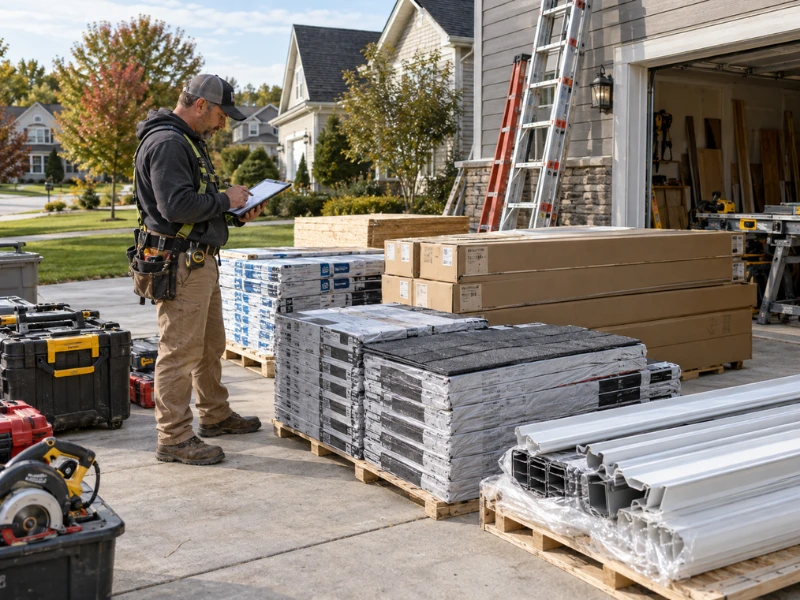
- Materials. Ordering, staging and checking deliveries before work starts.
- Quality control. Checking each phase before the next crew covers it up.
- Closeout. The punch list, cleanup and warranty paperwork.
You only have one person to deal with which means if problems arise there is no blame game between traders.
Why do multi trade projects need one person in charge?
Having a single point of contact for multi-trade projects is essential as the most risky work will generally be at the interfaces between trades. These are the usual places for leaks, gaps and delays.
A typical external project would have the roofing contractor finishing off the edge, the siding contractors up to the roofline and the gutters fitted onto the fascia. If nobody owns the flashing, drip edge and trim between them, water finds the gap.
That’s the clearest answer to when do you need a general contractor. If it’s a cross trade job then someone needs to be responsible for the joinery. Each crew will do a good job but the house will still leak.
The general contractor will help spot any conflicts early on. If the new siding is a different thickness then it will cause some issues with the trims and guttering. If this is spotted before the siding is put on you save having to do it all again at a cost.
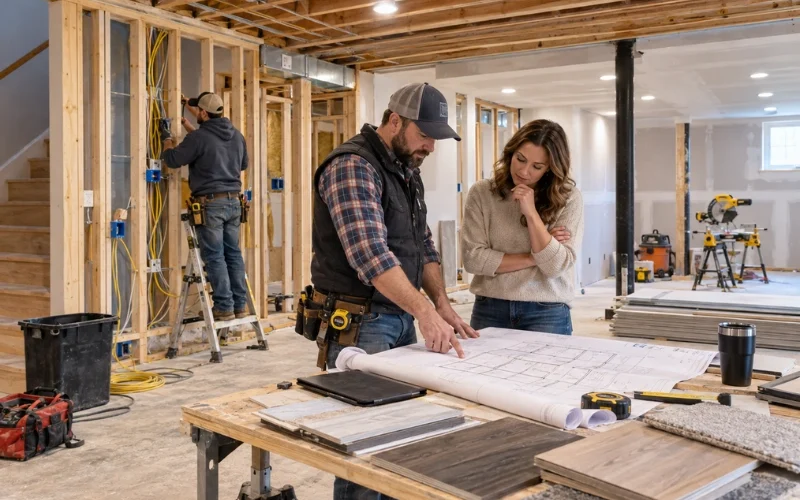
Interior projects work the same way. A basement remodel can involve framing, electrical, plumbing, drywall and flooring. Each one depends on the trade before it being done right and signed off.
How does project scheduling work across trades?
Project scheduling is the process of planning each trade in relation to material delivery, weather conditions and inspection dates. If any one element is delayed it can cause delays to all subsequent elements.
A solid schedule accounts for:
- Sequence. Roofing before siding, siding before gutters, and rough work before finishes inside.
- Lead times. Special-order siding colors, windows or roofing products can take weeks to arrive.
- Weather windows. Tear-offs and concrete pours need dry days.
- Inspections. Crews can’t cover work until an inspector signs off.
Local rules shape this too. Clermont County’s building department now requires the rough energy and electric service release inspections to be scheduled separately. Since June 1, 2026, those inspections have to come at least a day after the rough inspections pass.
That kind of detail is easy for a homeowner to miss. However, for a contractor managing several trades, it’s simply part of building the calendar. Good contractors also share that calendar with you up front, so you know which days crews will be on site and when to move vehicles.
What should you check before hiring general contractors near me?
Check general contractors near me for local permits, insurance, a written scope and a clear payment schedule before you sign. Ohio’s rules make your own checking more important than in many states.
Here’s why. The state’s licensing board covers commercial contractors in five specialty trades. Its contractor complaint guidance notes it may not have authority over residential contractors. Instead, local building departments and the Ohio Attorney General’s office handle those complaints.
So before you hire, ask for:
- Proof of insurance and bonding in the company’s name.
- References from projects similar to yours.
- A written scope that lists materials, colors and brands.
- Permit responsibility spelled out in the contract.
- A payment schedule tied to finished milestones, not calendar dates.
It also helps to search the Ohio Attorney General’s complaint records and the Better Business Bureau for any history of problems.
A question worth asking up front is how is a general contractor paid on their jobs. The answer tells you how much risk you’re carrying at each stage.
What does a whole-exterior project look like from start to finish?
A whole-exterior project moves from the roof down, with each trade finishing before the next one starts. Here’s how a combined roof, siding and gutter job usually runs:
Step | Trade | What the general contractor checks |
1. Site prep | Crew lead | Landscaping protected, dumpster placed, driveway clear |
2. Roof tear-off | Roofing | Decking condition, rot repairs before new layers |
3. New roof | Roofing | Underlayment, drip edge and flashing at walls |
4. Siding | Siding | Wrap, trim at roof lines, window and door flashing |
5. Gutters | Gutters | Pitch, downspout placement, fit against new fascia |
6. Walkthrough | Everyone | Punch list, cleanup, warranty paperwork |
Each step locks in the next one. This means that any issues will be much cheaper to fix at stage 3 rather than once the gutters have been installed. Inside the house the order will change, but the principle remains the same; rough in and inspections first followed by finishes.
Where do we handle general contracting around Batavia?
We handle general contracting across Batavia, Mt. Orab and the rest of Clermont and Brown counties, plus Greater Cincinnati. Our crew works out of Mt. Orab, so most Batavia projects are a short drive.
If you’re comparing general contractors in Batavia OH, our guide on what a general contractor costs in Batavia covers pricing in detail. Homeowners asking who manages whole-home projects near Batavia and Mt. Orab Ohio can see our full list of home services, from roofing to basements.
And if you need general contracting Batavia OH for an exterior job, start with our roofing and gutter and siding pages. You can also browse finished work in our portfolio. Since we also build decks, patios and concrete, outdoor living projects can fold into the same plan and the same crew schedule.
How do you get a free project estimate?
Call (513) 773-1567 or use our contact page to request a free estimate. A crew member will walk the scope with you, and you can save 10%, up to $1,000, when you sign on your first visit.
Frequently asked questions
1. When do you need a general contractor rather than a single trade?
A General contractor is required if your project includes two or more trades, requires permits and involves the structure of the home. If your project is simple and one off such as replacing a water heater or a section of roof you can use just one trade. It becomes complicated when there are multiple trades involved.
2. How is a general contractor paid?
Most General contractors will ask for an initial deposit and then stage payments once the main stages of the project are complete. Usually the last payment will be after the walk through and punch list. From here they will pay their crews and suppliers.
3. Who handles scheduling between the trades?
The contractor will coordinate the order that the work is carried out in, organise each crew, track when materials are delivered and coordinate inspection times. This means that you’ll have one point of contact to ask for updates.
4. Can one company handle roof, siding and gutters in one project?
Yes, usually it will be easier to go with one company. They can ensure that colours and trims match throughout, joints will be flashed properly and it will be one clean up. You’ll also have one warranty for your entire exterior.
5. What happens if one trade delays the rest?
A good General contractor will reschedule so that work can still be completed where possible. For example internal prep and staging of materials can be done while you wait for the late delivery. They should also inform you straight away how this will affect your finish date.
Visit or call us
Empire Home Solutions
Address: 16493 Bodman Rd, Mt. Orab, OH 45154
Office: (513) 773-1567
Deck Division: 513-513-DECK (3325)
Email: info@empirehome.solutions
Hours: Monday through Saturday, 8 a.m. to 8 p.m. Closed Sunday.
Family-owned, insured and bonded since 2009, with a lifetime craftsmanship warranty. Serving Batavia, Mt. Orab, Amelia, Clermont and Brown counties, and Greater Cincinnati.
Recent Posts
Chris Kestel0 Comments
What Happens During Emergency Roof Repair In Amelia?
Chris Kestel0 Comments
What Do General Contractors Near Me Actually Handle?
All Categories
Tags
basement contractor (6)
basement remodeling (6)
basement renovation (4)
basement transformation (7)
composite deck builder (5)
composite deck contractors (3)
composite decking (3)
Concrete Contractors (8)
concrete foundation contractor (3)
concrete pouring services (4)
concrete repair services (3)
covered deck ideas (12)
Custom Deck Builders (6)
deck builder (10)
deck cleaning (3)
deck construction (3)
deck contractors near me (5)
deck design and installation (3)
decking contractors near me (3)
deck installation (13)
deck remodeling (4)
deck remodeling contractors (3)
deck services (4)
durable sidings and gutter (15)
Empire Home Solutions (60)
Expert Exterior Remodeling Contractors (4)
exterior painting services (4)
general contractor (92)
general remodeling services (5)
home additions contractor (3)
house remodeling services (3)
interior painting services (3)
kitchen remodel companies (4)
kitchen remodeling contractors in Amelia (6)
kitchen renovation near me (5)
OH (10)
open deck ideas (12)
open vs covered deck (12)
painting contractors (6)
patio services (4)
pool deck resurfacing contractors (3)
remodeling contractor (6)
remodeling contractors (10)
siding and gutter contractor (17)
trex decking installation (3)